
Residential Mobility
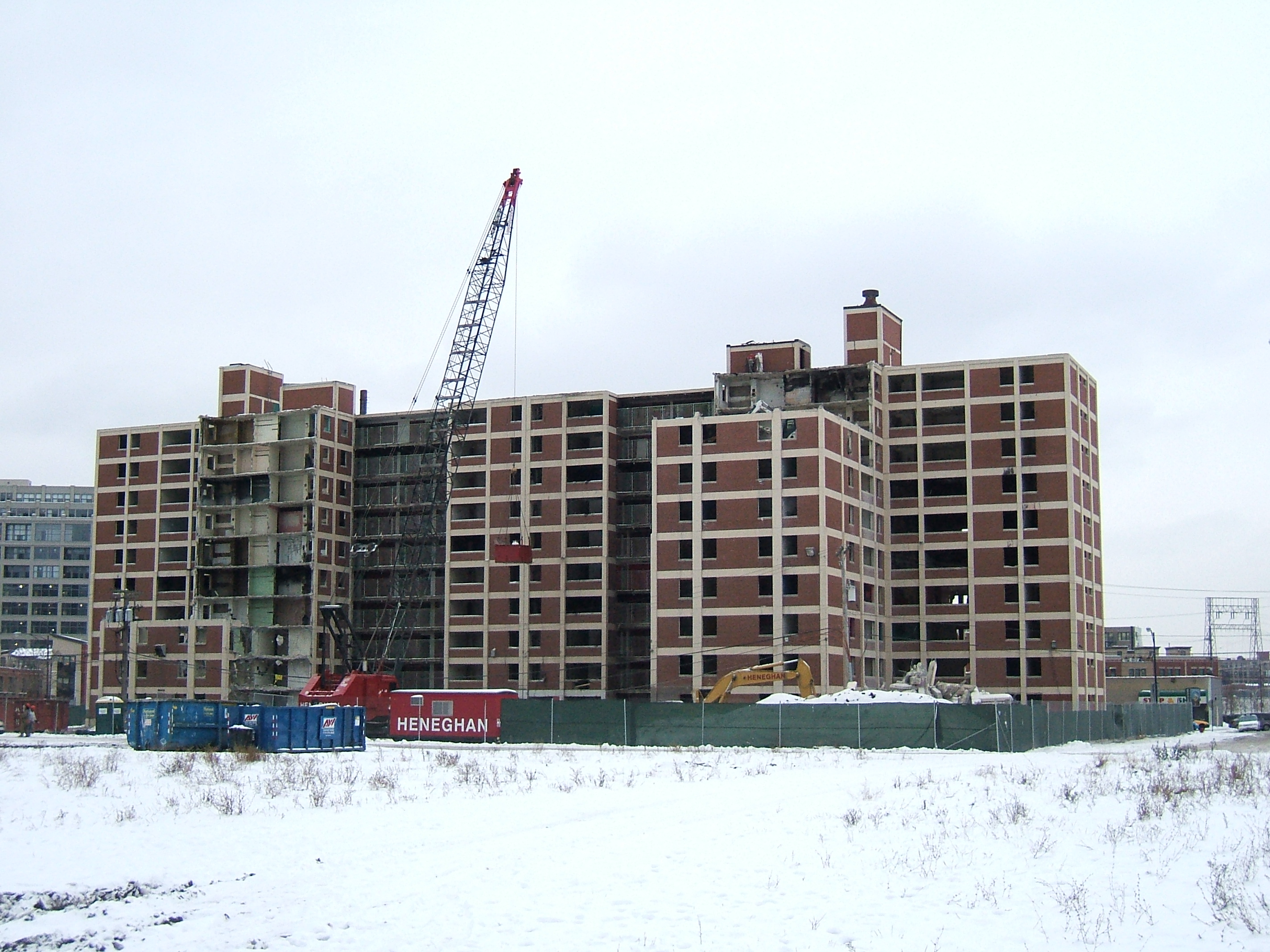
This project examines residential mobility in the United States through three complementary studies: a historical review of how the field has measured mobility over a century of data and methods; a longitudinal tracking of Chicago public housing residents displaced by the HOPE VI demolition program; and an analysis of whether New York City's Mandatory Inclusionary Housing program alters local migration patterns and neighborhood outcomes.
Publications
Where did they go after HOPE VI? A longitudinal study of long-term neighborhood attainment outcomes in Chicago
Xu, W., Lee, Y., Lei, Y., Zhou, Z., Zhang, Y., Freeman, L.
Housing Policy Debate, 1–28, 2026
This study examines the long-term residential outcomes of Chicago public housing residents displaced by the HOPE VI program, which demolished distressed developments and redeveloped some into mixed-income communities.
Using individual residential history data from 1980 to 2021 and administrative data on subsidized housing, we examine where displaced residents moved to, how the neighborhood characteristics of HOPE VI displacees compare with those of similar but voluntary movers, and, among HOPE VI displacees, how outcomes differ by relocation housing type — traditional subsidized housing, new mixed-income housing, or the private market.
Our study finds that HOPE VI displacement had the effect of moving residents into neighborhoods with higher Black population shares, lower median incomes, and lower educational attainment compared to the neighborhood environments of the control group. Among relocatees, fewer than 10% accessed mixed-income redevelopments; these residents experienced slightly fewer moves and eventually improved neighborhood outcomes in education and racial composition. Private-market movers saw short-term neighborhood-level gains in income and racial integration that dissipated over time.
https://doi.org/10.1080/10511482.2026.2688182Measuring residential mobility: A historical overview of novel data and methodological approaches
Freeman, L., Lee, Y., Lei, Y., Xu, W.
Journal of Planning Literature, 2025
This review paper analyzes the evolution of data sources, methods, and challenges in measuring residential mobility in the United States since the turn of the 20th century, focusing on attempts to measure these aspects of residential mobility: (i) its magnitude; (ii) its “why”; and (iii) its spatial and temporal context.
The expansion of data and methods has been instrumental in the development of theoretical frameworks and the ability to interrogate key empirical questions over the decades. While imperfect, the recent growth in alternative sources of individual- and household-level mobility data promises to extend the frontiers of residential mobility research.
https://journals.sagepub.com/doi/full/10.1177/08854122251382934A twist of fate? Tracking changes in local migration patterns in the wake of inclusionary zoning
Lei, Y., Lee, Y., Xu, W., Zhou, Z., Zhang, Y., Freeman, L.
In preparation, 2025
Draft available upon request